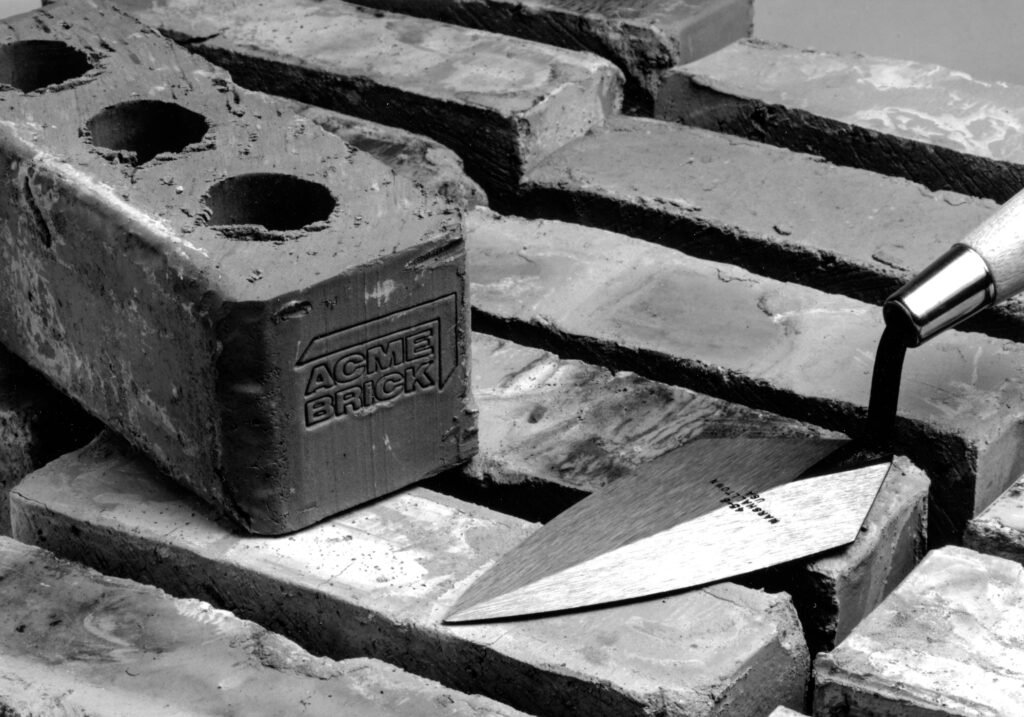
A journey that lasts 135 years is remarkable for its longevity and the tenacity required to continue. Why? It’s a sure bet the travelers on this trip have encountered more than a few bumps in the road.
Starting in 1891, Acme Brick began operation near a small North Texas town, and no one had any idea it would grow into the powerhouse it has become today. The entrepreneurial spirit that was part of the company’s DNA has been constantly tested and retested, and continues to burn brightly. This was despite wars, pandemics, recessions, depressions and the constantly changing construction technology.
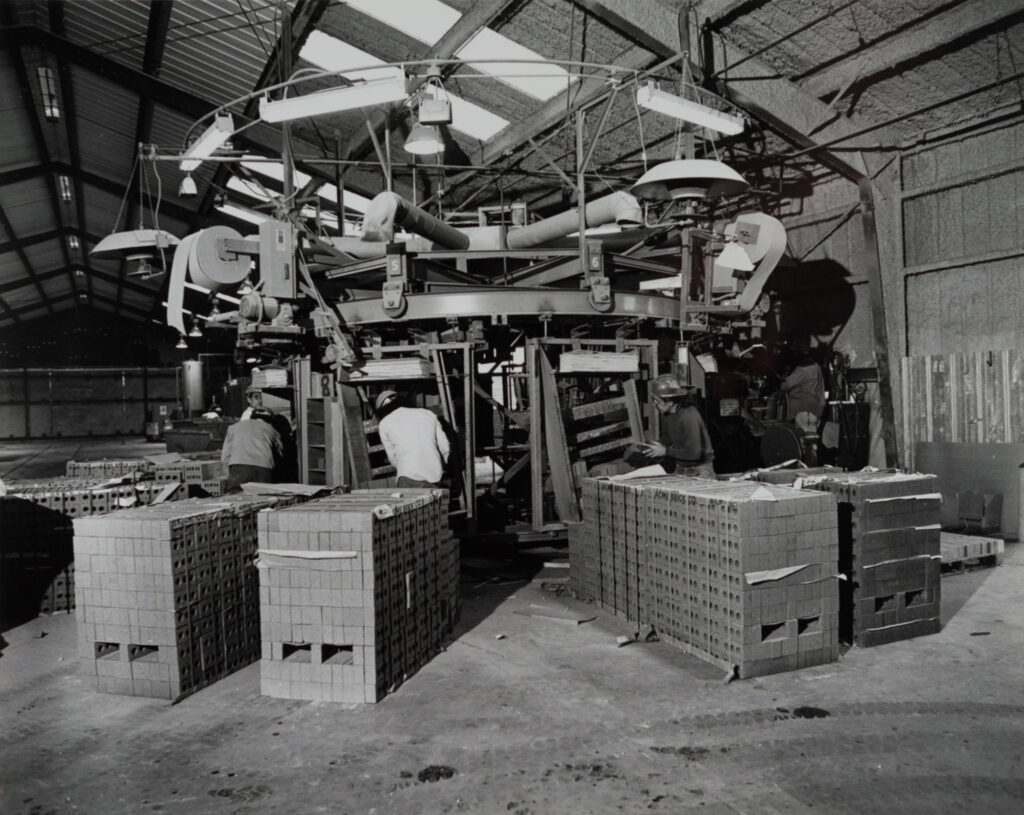
The people and the products of Acme have delivered value to customers for more than a century. Over this time, they have built a reputation for QUALITY every day. How the company has dealt with the challenges of 135 years is an interesting story. To learn it, read on.
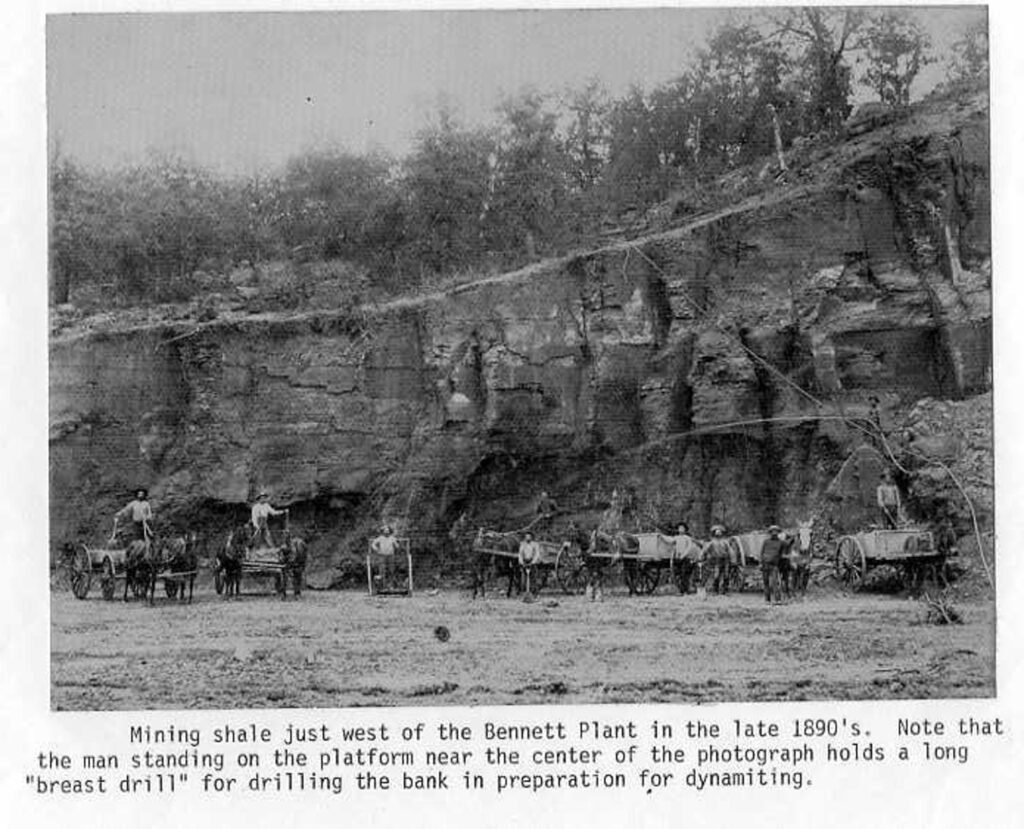
From the moment George E. Bennett founded Acme Brick in 1891, he approached the venture with a vision far larger than a single brick plant. A former newspaperman with an instinct for opportunity, Bennett began searching for the raw materials that would build and sustain a modern manufacturing enterprise. He found them along the banks of a Brazos River tributary, some 40 miles west of Fort Worth.
George Bennett envisioned a plant powered by emerging industrial technologies with machinery capable of producing uniform, high‑quality brick at a scale that Texas had never experienced. Bennett’s willingness to bet on innovation rather than convention set Acme apart from the start, establishing a foundation of innovation and ambition that would shape the company’s trajectory for generations.
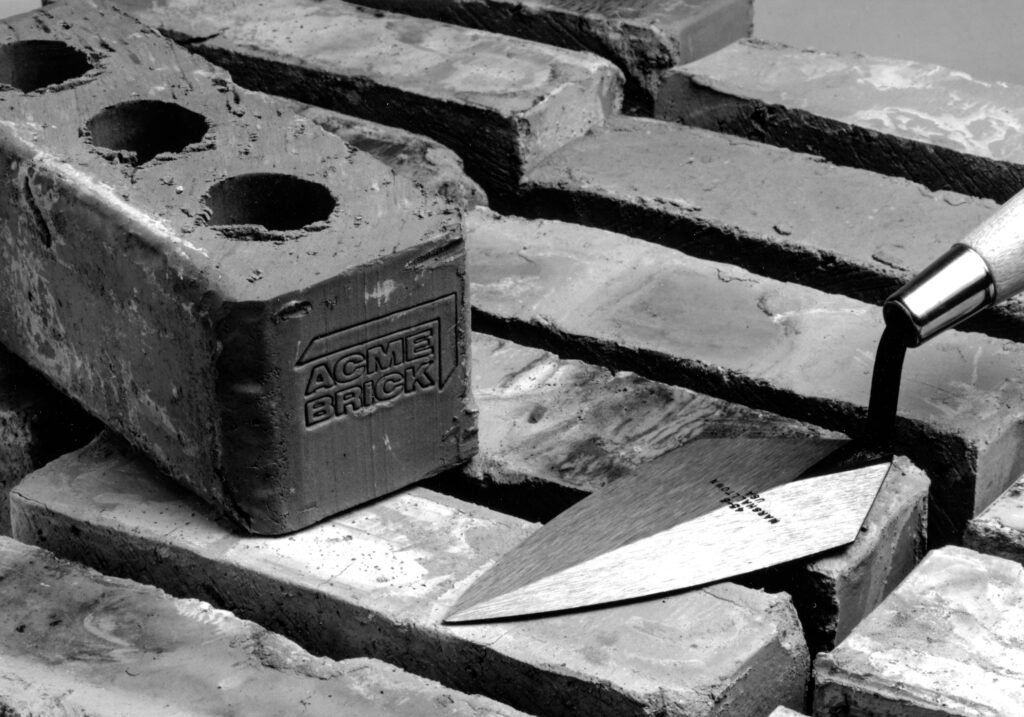
From its earliest days, Acme Brick distinguished itself by embracing the most advanced production tools available. The company’s first major leap came with the Boyd Press, a powerful mechanical system that delivered uniform, high‑density brick at a pace that traditional hand‑molding could never match. That commitment to innovation continued as Acme adopted the tunnel kiln, a continuous‑firing breakthrough that replaced the stop‑and‑start batch methods of the 19th century. The new system dramatically increased output while ensuring a level of consistency that quickly became one of Acme’s defining strengths.
By the early 20th century, the company pushed forward again by converting its kilns to natural gas, a cleaner and more controllable fuel source than wood or coal. This shift not only improved efficiency but positioned Acme at the forefront of modern, environmentally conscious manufacturing long before such considerations became industry standards.
The early 1900s brought Acme face to face with real danger. The financial shock that began with the Panic of 1907 lingered for years, draining construction demand and forcing many manufacturers to shut down. By 1910, Acme Pressed Brick had reached its breaking point and closed its plant, unsure whether it would ever reopen. What happened next became one of the most enduring stories in the company’s history.
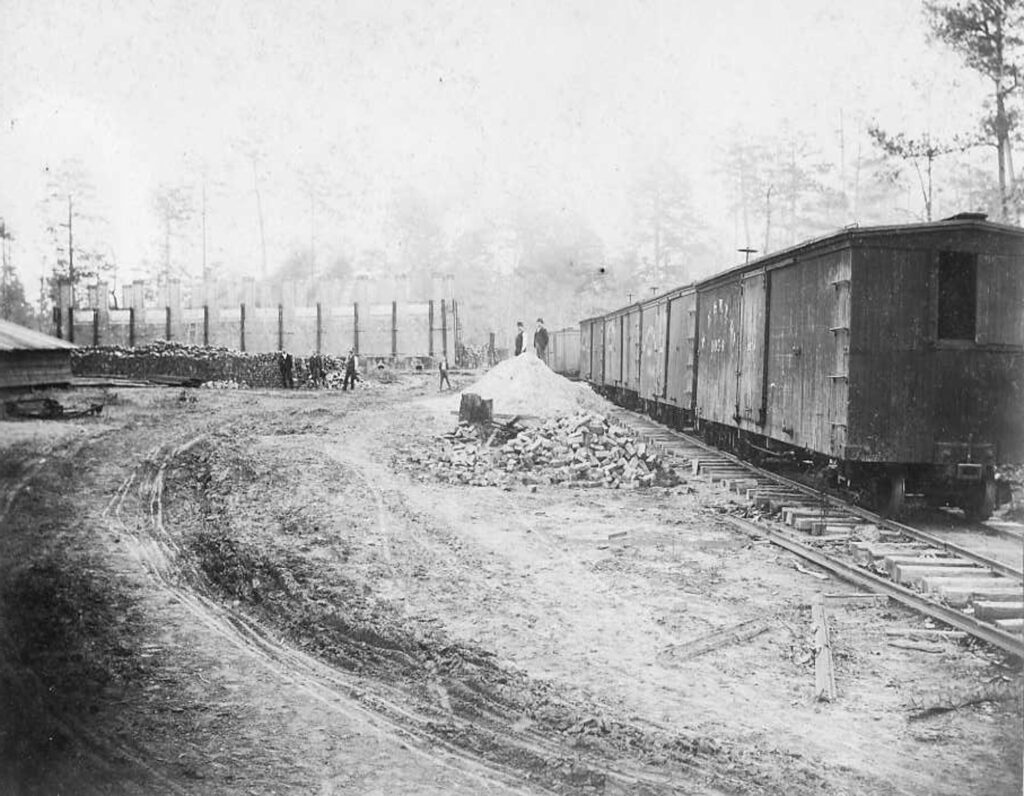
Acme salesman Ernest Fender learned that a devastating fire had swept through Midland, Texas and the town urgently needed brick to rebuild. Recognizing the opportunity, Fender acted immediately. He secured a loan in the nearby town of Millsap to cover operating costs, then caught a freight train west to meet the demand head‑on. He returned with a substantial order, large enough to restart production, bring employees back to work, and pull the company out of crisis!
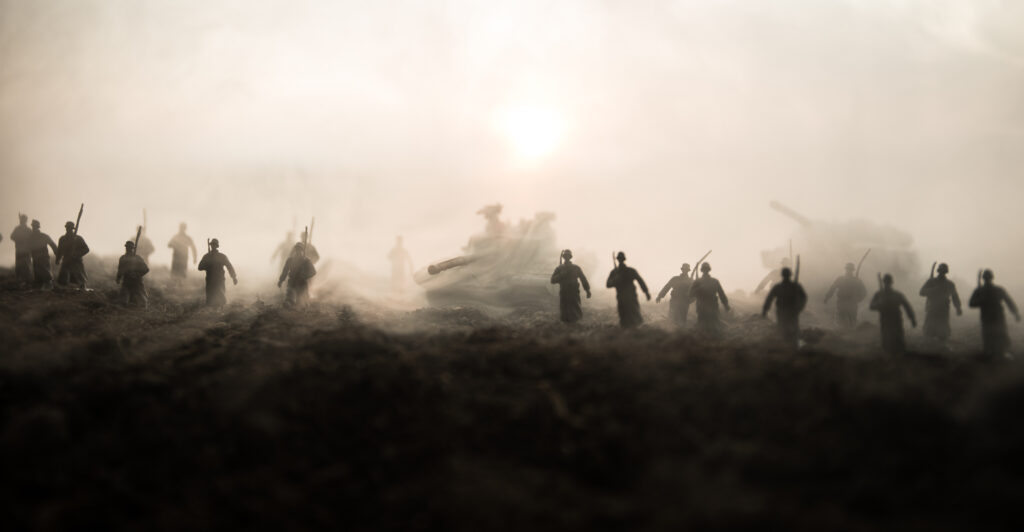
World War I arrived at a formative moment for Acme Brick. The conflict reshaped the American economy, accelerating domestic manufacturing and infrastructure development as the nation prepared for war. This meant rising demand for durable, fire‑resistant building materials and a transportation network that was expanding under federal pressure to move troops and supplies efficiently.
Railroads also extended deeper into Texas during these years, giving Acme broader reach. This development also reinforced the company’s early entrepreneurial instinct to invest in modern production, stay close to transportation corridors, and be ready when the market turned.
When World War I ended in 1918, the economic momentum unleashed during the conflict carried directly into a period of rapid expansion for Acme Brick. The spread of automobiles transformed the American landscape, prompting an explosion of road building that opened new distribution channels and made it easier to move brick across a widening Southwest market. At the same time, Texas was entering one of the most dramatic oil booms in its history, fueling commercial and industrial construction at a scale the region had never experienced.
Residential growth also surged. This was driven by rising populations, expanding cities, and a growing preference for brick homes, valued for durability and fire resistance.
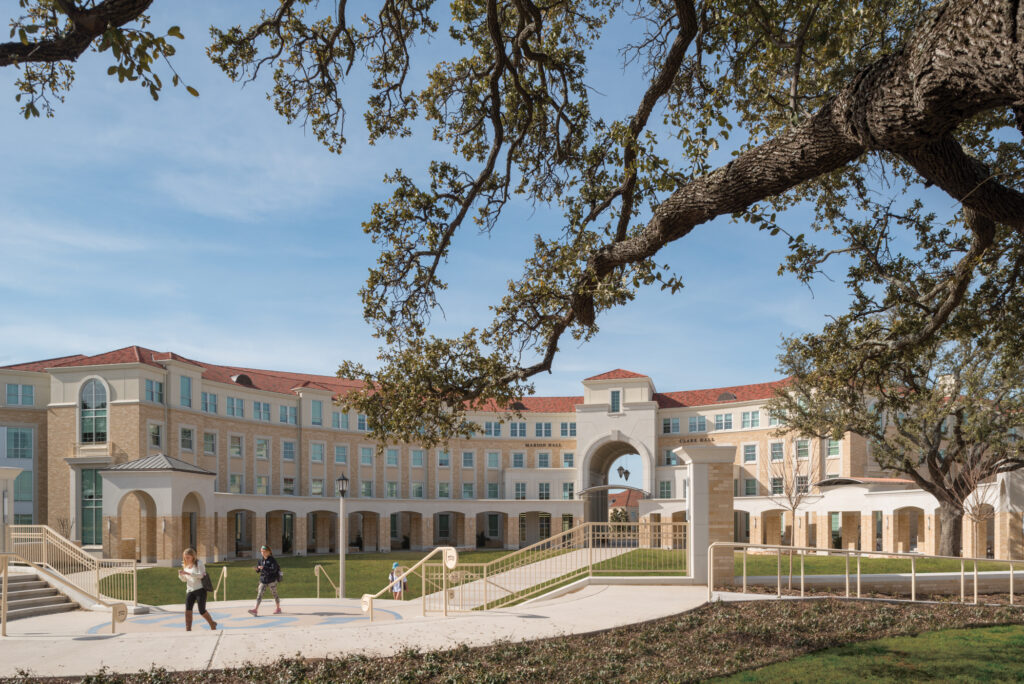
Acme Brick’s growing reputation for quality and architectural reliability drew the attention of major universities during the 1920s, and the first to make a defining commitment was Texas Christian University. As TCU expanded its campus, the school turned to Acme to help establish a cohesive architectural identity. This partnership marked a meaningful shift for Acme, demonstrating that the company had moved beyond industrial and residential work into the realm of academic architecture, where longevity, uniformity, and aesthetic integrity mattered deeply.
TCU’s choice set off a wave of similar decisions across the region. Southern Methodist University, Texas Tech University, The University of Texas, Baylor University, and Texas Wesleyan and, over the next century, 86 additional schools incorporated Acme Brick into their expanding campuses. This created enduring landmarks that still define their look today.
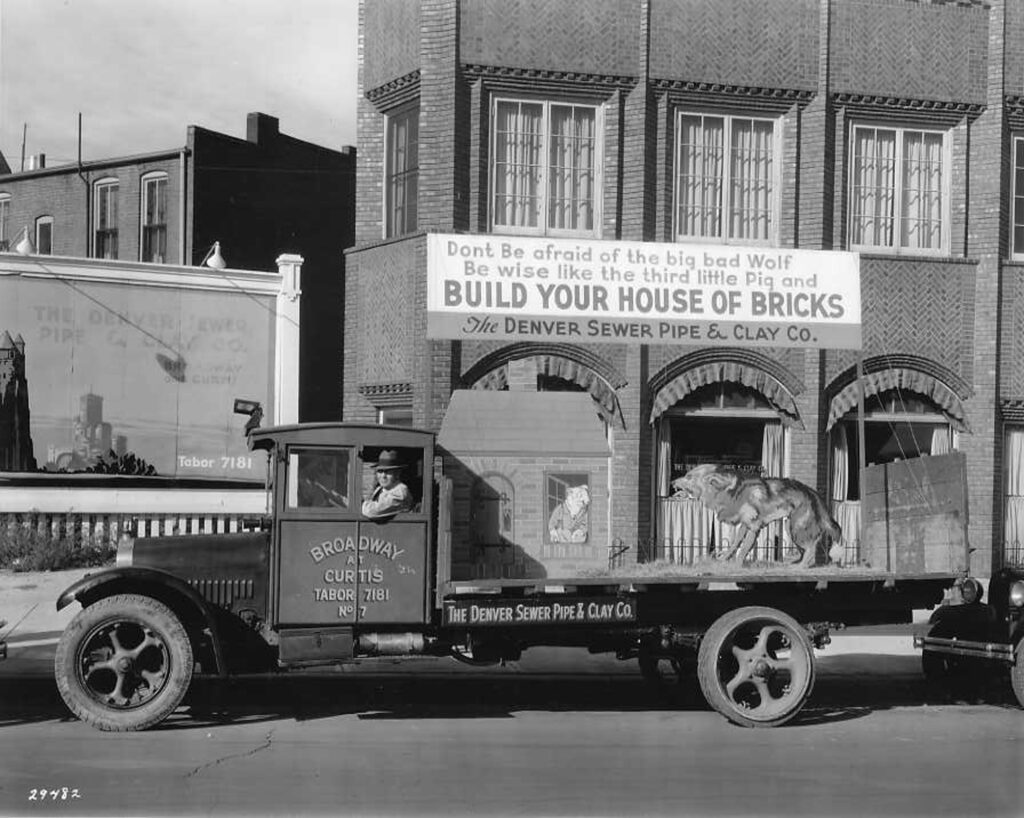
The Great Depression struck the construction industry with a force that few companies could withstand, and Acme Brick felt the impact immediately. As projects stalled across the country and financing evaporated, demand for brick collapsed almost overnight. Many competitors never recovered, but Acme managed to endure. It tightened its operations, consolidated production, and leaned on the efficiencies it had built through earlier investments in modern kilns and rail‑served plants.
Survival required more than technology. It demanded a mindset shaped by hard experience. Acme’s leaders understood how to protect core operations, conserve resources, and position the company for the moment when the market would inevitably turn. That institutional memory became one of Acme’s greatest assets, allowing it to weather the worst economic crisis of the century with its future and its identity still intact.
Recovery began to take hold in the mid‑1930s. Federal New Deal programs poured money into public works, infrastructure, and civic construction. Agencies like the PWA and WPA financed schools, courthouses, utility buildings, and other community projects across the Southwest. The work depended heavily on durable masonry.
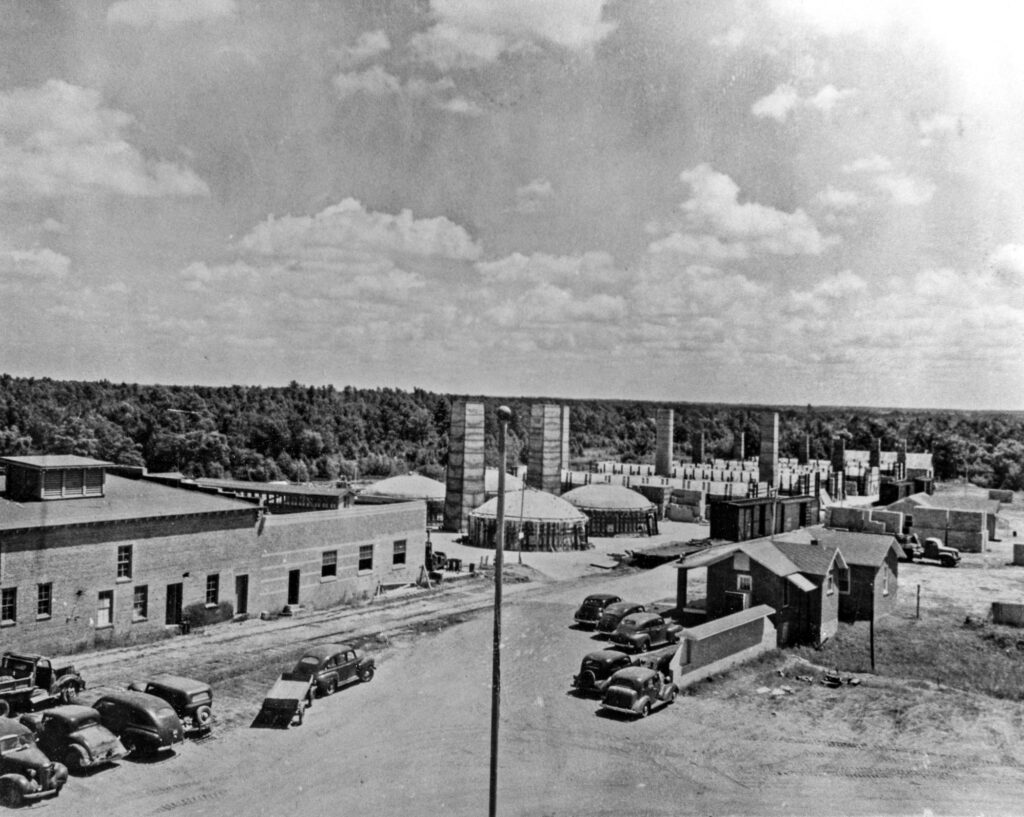
World War II brought a new set of pressures as the nation shifted into full mobilization. Acme Brick had to navigate challenges unlike anything it had faced before. Labor shortages swept through the construction industry as workers enlisted or were drafted, leaving plants across Texas struggling to keep kilns operating and orders moving.
Materials were rationed, and civilian construction slowed dramatically as federal priorities turned toward military bases, defense plants, and war‑related infrastructure. In response, Acme streamlined its operations, cross‑trained the employees who remained, and focused its efforts on essential projects that supported the national mission.
When World War II ended in 1945, the United States entered one of the most dramatic construction booms in its history. Acme Brick was uniquely prepared to meet the moment. Returning veterans fueled an unprecedented wave of homebuilding, supported by the GI Bill. A rapidly expanding highway system made suburban growth possible on a scale the country had never seen. Brick was durable and fire‑resistant and became the material of choice for both new neighborhoods and civic architecture.
Acme’s wartime discipline and operational adaptability paid off in full during these years. The company scaled production quickly, broadened its plant network, and established a reputation for reliability that set it apart in a crowded market. By the time the postwar boom reached its peak, Acme had emerged as one of the Southwest’s most trusted and prolific brick manufacturers, ready to help build the homes, schools, and commercial centers that defined a new American era.
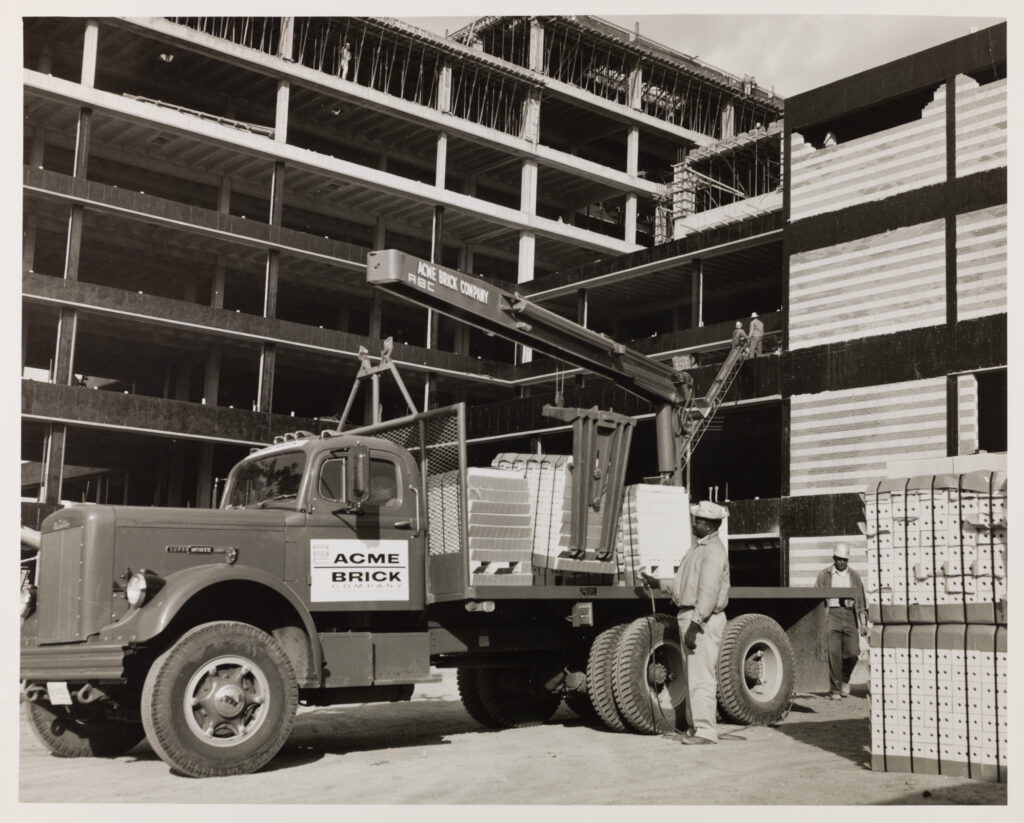
By the 1950s and 1960s, Acme Brick had become a defining presence in the Southwest’s built environment. Suburban growth, modernist design trends, and a booming regional economy created enormous demand for durable, visually consistent masonry. Acme’s multi‑plant network was primed to deliver. Architects and builders relied on Acme for the clean lines and uniform color palettes that shaped mid‑century schools, churches, commercial centers, and new residential communities.
During this era, Acme Brick appeared in several prominent projects, including Dallas Love Field’s mid‑century expansions, and a wave of public schools and municipal buildings. Nationally recognized architect O’Neil Ford, a strong preservationist and frequent client of Acme Brick, helped launch Texas architecture on a new path by showing that its roots were deep and often beautiful. His well-crafted structures were brick, glass, and wood, and were intimately tied to their settings.
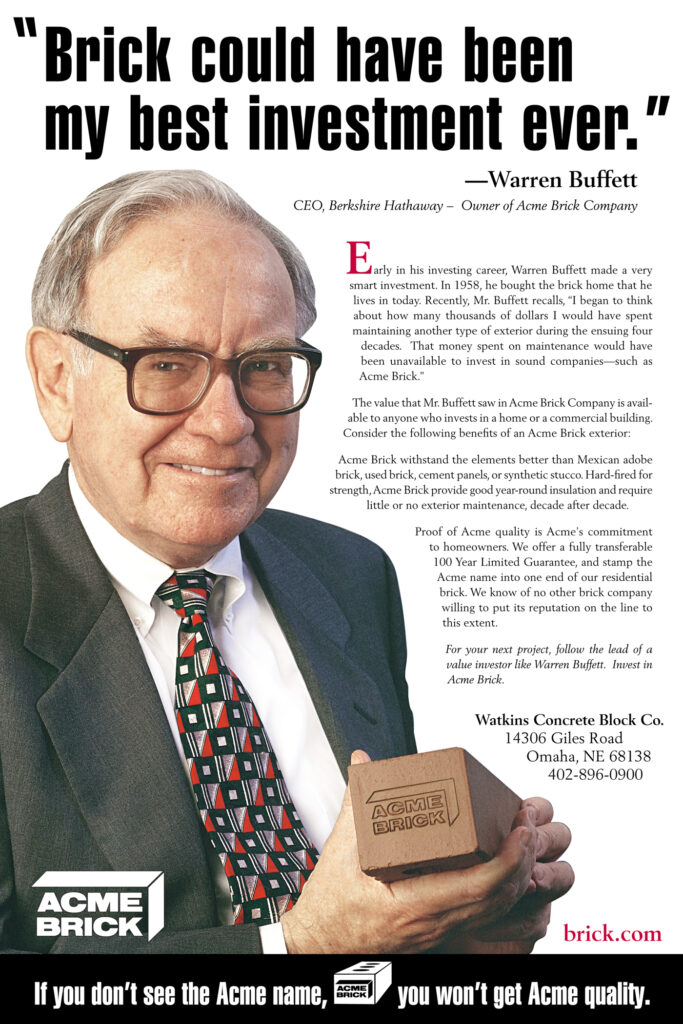
Stock market savant Warren Buffett, whose company Berkshire Hathaway was known for its extensive research and thoughtful moves, purchased Acme Brick on August 1, 2000. News coverage at the time reported this was a “notable acquisition for the conglomerate.”
For Acme, this change added greater financial depth and operational stability. This positioned Acme for continuous growth while preserving the disciplined approach that has guided Acme Brick for more than a century. During this period of the early 21st century, Acme also began to gain national recognition for innovative conservation and corporate responsibility practices. These efforts continue today.

Not since the Spanish flu epidemic (1918) killed tens of millions worldwide has an epidemic such as COVID (beginning in 2019), touched almost every family and business in the world. In addition to health concerns about the families of its associates, Acme Brick was forced to juggle supply chain stoppage for both hard goods and raw materials. The company limited employee interactions and curtailed “work as usual,” thereby weathering the worst of this traumatic event.
Ironically, the pandemic had an unforeseen impact on Acme customers. Forced to stay at home 24/7, families changed work, travel and entertainment patterns. They began improving/remodeling existing homes and “discovered” entertainment options in the kitchen and backyard. Patios, pools, outdoor kitchens, fire features and dining at home became an important part of the Acme business plan. These new products allowed the company to become “more than just brick.”

The current CEO of Acme Brick, Ed Watson, has been with the company for more than 40 years. After graduating from Texas Tech University, Ed started with Acme Brick as a plant engineer. His four decades with the company have convinced him that the best is yet to come.
“Acme Brick Company and our 1,700 associates are proud of our history, but we’re even more excited about the future, said Watson. “For our customers – the builders, architects, and homeowners – we will continue to offer brick and other building products that are forged in quality and meet the rigorous standards of our storied past.
“Thank you for your support! We will continue to strive to earn it.”
After 135 years, Acme has shown a remarkable ability to understand the values and tastes of American homeowners. If you are thinking about remodeling or buying a new brick home, click here for products and ideas that have been in the making for a long, long time.

Thanks for stopping by! We’re constantly working to make Brick.com the best resource for your projects. We’d love to get your feedback about your experience today—it only takes about 60 seconds and helps us make improvements for you.