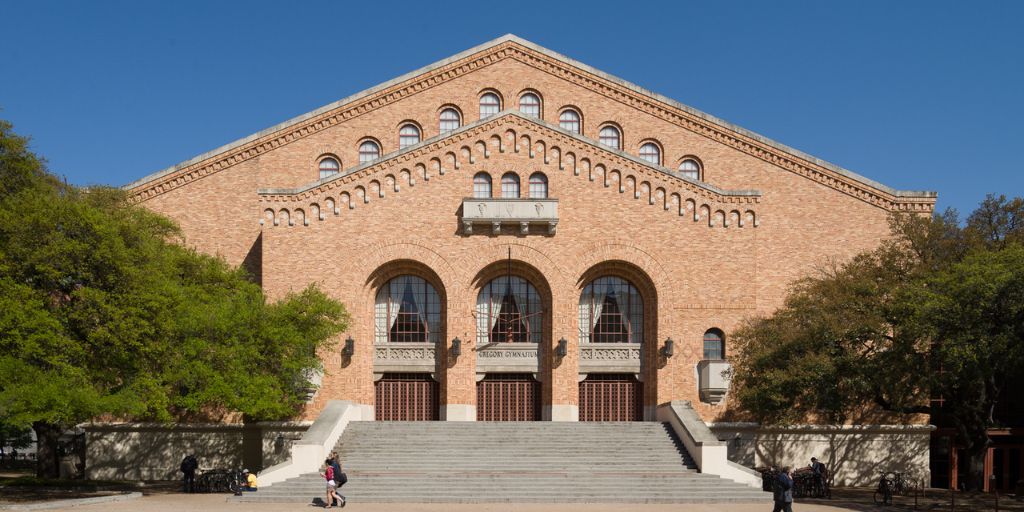
One of the best-known buildings on The University of Texas at Austin campus, Gregory Gym, was built in 1930. Its unique appearance is a function of the color of its brick, from a company 200 miles north, Acme Brick.
The story of Gregory Gym became part of the folklore of the Texas Longhorns.
Brick construction can hold its integrity and beauty for centuries. For more information on Acme Brick, reach out to an expert.
As several University of Texas websites note, “The original tract of land set aside by the state of Texas for the university was 40 acres. Those 40 acres formed a square with ‘College Hill’ at its center.
“In September 1883, the University of Texas officially opened in a ceremony on a grassy hill where the Tower now stands. The following January, students reported to the campus and its one building, a ghost of history now known as ‘Old Main.’ Today, that square is defined by 21st Street, Guadalupe Street, 24th Street, and Speedway. The Tower sits at the top of College Hill.
“‘Forty Acres’ has since become commonplace among Longhorns everywhere,” as a metonym for the entire campus – all 431 acres.
The namesake of Gregory Gym was among the first 13 graduates of the University of Texas. Receiving his LLB in 1885, Thomas Watt Gregory joined the Texas State Bar and began solo practice.
According to this UT source, “At a time when university libraries were sparse, Gregory made his private collection open to UT students. Throughout his early law career, he remained active with his alma mater. He formed the Alumni Association in 1885, was one of the original purchasers of Clark Field (baseball), and organized the Texas Gamma Eta Chapter of the Alpha Tau Omega fraternity.”
Gregory went on to an illustrious law career. It included four and a half years as U.S. Attorney General under President Woodrow Wilson.
“When Gregory was elected president of the Ex-Students’ Association in 1926, he began, in earnest, a drive to build a university gym. His fund-raising efforts made possible what we now know as Gregory Gym, Anna Hiss Gym, and the Union Building.
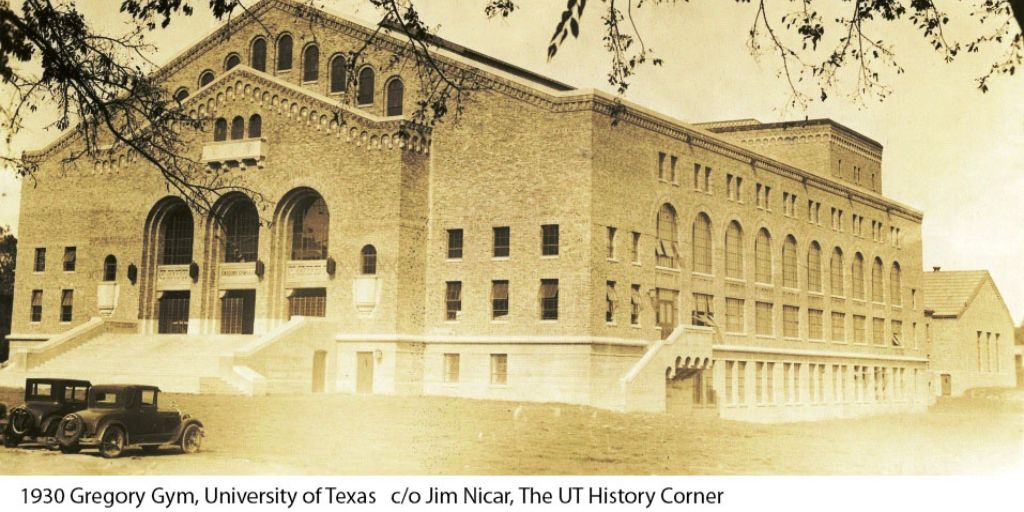
“Gregory Gymnasium, built in 1930 at an approximate cost of $500,000, was one of the pioneering projects of the University of Texas campus. The proposal for a new modern gymnasium was made in 1907 by Gregory.”
In the past hundred or so years, many things have changed in the construction of large, public projects like these UT gyms and the Union building. However, one factor remains constant: The brick is timeless.
According to Britt Stokes of Acme Brick, “Even in the depths of the ‘Great Depression,’ our kilns remained hot and our hard-working teams kept producing brick. ‘Texas Exes’ like Thomas Gregory raised more than $600,000 ($8.7 million in 2022 dollars) to build these iconic structures. This was no small feat.
“As with other campuses around the country, the University of Texas wanted a unique ‘look’ for its new buildings,” he said. “The UT Regents chose a brick color palette for building on campus. Over the next century. It became known as the ‘UT Blend.’”
According to UT sources, “Construction began on the auditorium-gymnasium on May 10, 1929. It was completed and formally dedicated one year later, on April 12, 1930, at the first annual Longhorn Round-Up.”
The regents formally named the new building for Thomas Watt Gregory on May 30, 1930.
As the UT campus continued to expand over the years, Gregory Gym remained in the heart of these 40 acres. It faces the main street that runs through Longhorn Nation—Speedway.
Stokes noted, “The gym is a testament to how a brick building can gracefully accommodate changing styles and functions,” he said.
According to UT websites, “For 46 years, Gregory Gymnasium served as the home for the UT basketball and swimming teams until the Erwin Center and the Jamail Texas Swimming Center were built. Until 1977, it also hosted the University Interscholastic League state basketball championships. University registration took place in Gregory Gym until Bellmont Hall was completed in 1972.” The gym also hosted “many other large events such as the Longhorn Round-Up, dances, speeches, and performing arts presentations.”
“In spring 1962, the addition of the Gregory Annex became the first renovation. The three-floor addition connected to the south side of the building and extended down to 21st Street. Among the unique details of the addition were electric clocks for the new basketball courts, a large gymnastics facility, and an observation walkway above the gym.
“In December 1995, Gregory Gymnasium closed to begin a $26.8 million renovation. After 22 months of construction, the facility reopened on November 12, 1997.
“The Gregory Gym renovation project created the Gregory Gym Aquatic Complex, featuring a complete renovation of the then 75-year-old Natatorium.” It also added “a new two-acre outdoor complex consisting of an outdoor lap pool, two outdoor leisure pools, a spa, reception garden, deck for lounging, wireless Internet, and lush landscaping.”
In recent years, Gregory Gym has been the home of the perennially highly ranked U.T. Women’s volleyball team.
Over more than 130 years, Acme Brick has been an integral part of some of the most iconic structures in the Southern United States by supplying a building material that will last centuries.
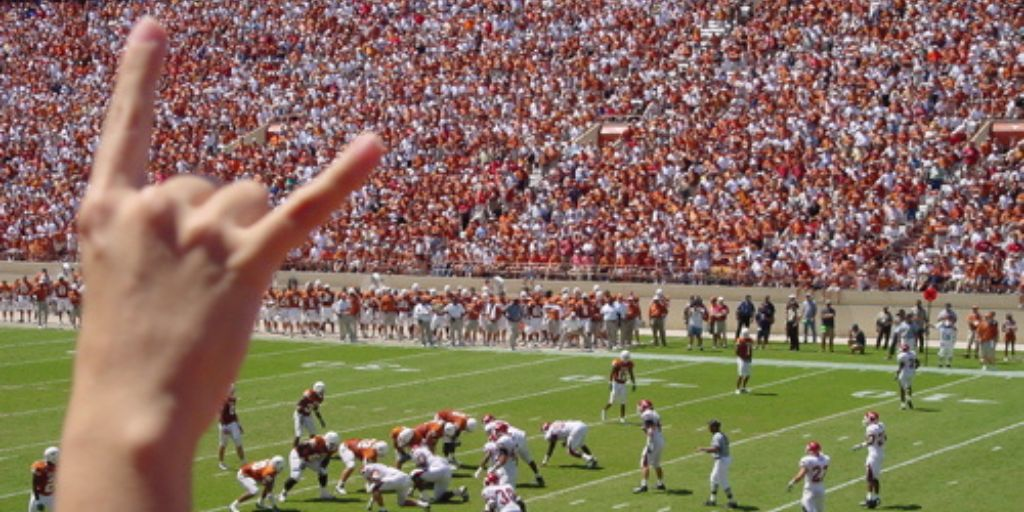
University of Texas football field
Acme Brick has been a part of some of the most iconic public and private buildings in the United States. If you are planning a home, office, or public building, let us show you what history can look like.
As with these other buildings, the brick surrounding Gregory Gym has stood the test of time. It has also been held witness as millions of students raised their right arm and arranged the fingers of their right hand in replica of the horns of their beloved mascot, Bevo, to salute the school they love. Hook ‘em Horns.
Lorem ipsum dolor sit amet, consectetur adipiscing elit, sed do eiusmod tempor incididunt ut labore et dolore magna aliqua. Ut enim ad minim veniam, quis nostrud exercitation ullamco laboris nisi ut aliquip ex ea commodo consequat. Duis aute irure dolor in reprehenderit in voluptate velit esse cillum dolore eu fugiat nulla pariatur. Excepteur sint occaecat cupidatat non proident, sunt in culpa qui officia deserunt mollit anim id est laborum.

Thanks for stopping by! We’re constantly working to make Brick.com the best resource for your projects. We’d love to get your feedback about your experience today—it only takes about 60 seconds and helps us make improvements for you.