
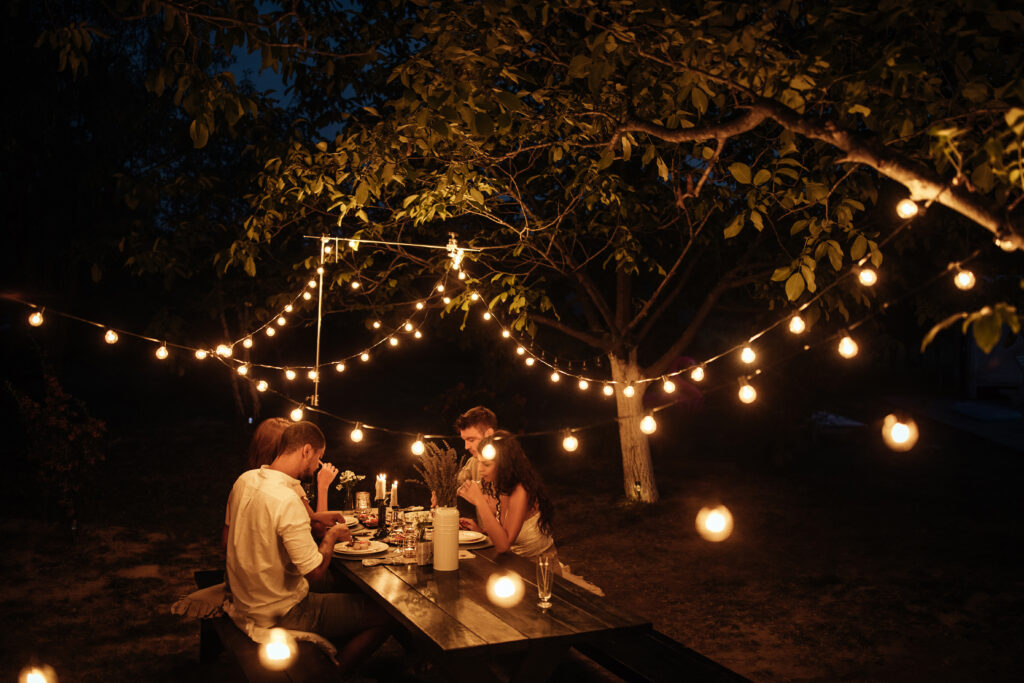
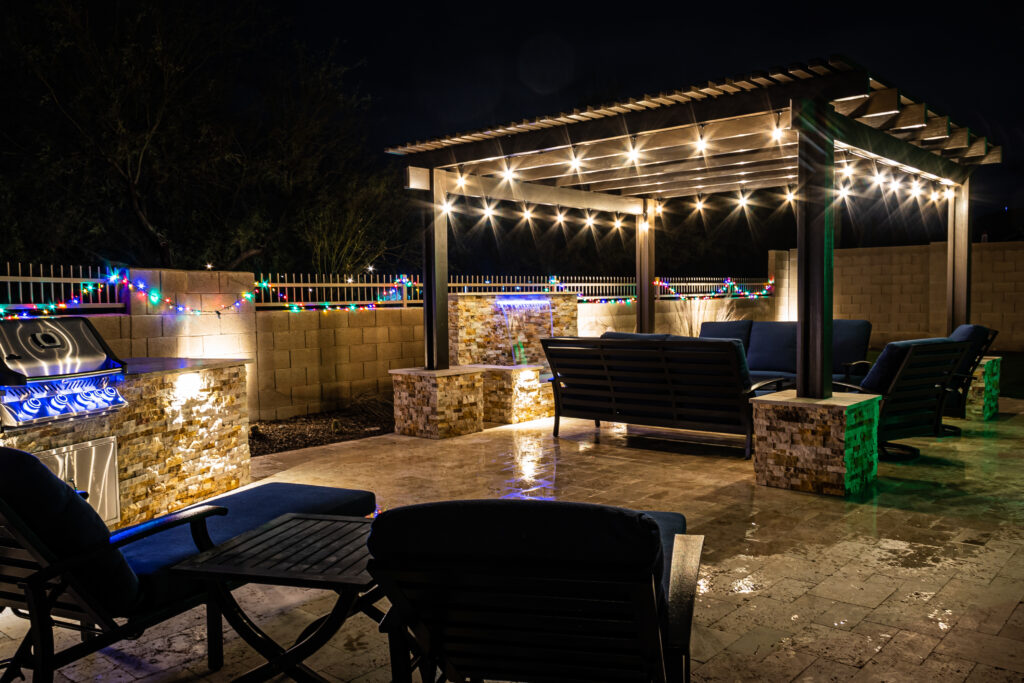
A beautiful yard shouldn’t fade into the background just because it is dark outside. In many ways, evening is when a patio, garden path, outdoor kitchen or backyard fire feature can feel its most inviting. The right lighting makes that possible.
There’s something almost irresistible about a yard or garden after dark. The air feels softer. The trees seem to sway a little differently. A patio that felt practical by day now feels romantic and mysterious.
This is the feeling that singer Van Morrison captured so well in his song Moondance. The sense of stepping outside on a luminous night and finding the whole world transformed. In a well-designed outdoor space, lighting creates that same kind of magic. It can make leaves shimmer, brick and stone glow, and a familiar backyard feel like a place where the evening naturally unfolds.
According to the experts at Livingetc, moonlighting is “a wonderfully atmospheric lighting technique that mimics the softness of natural moonlight by casting light downward from above.” Instead of placing bright fixtures at eye level, moonlighting relies on soft, downward-facing lights placed high in trees or pergola beams.
There is no better lighting director than Mother Nature. For homeowners who want to enjoy the largest room in the house – the backyard – in the late evening or night, thoughtful lighting that mimics moonlight can be stunning. To find out how this “moondance” can change the way you see your backyard, read on.
When the sun goes down, the light from the stars and moon moves through leaves and limbs, casting gentle, shifting shadows across outdoor entertainment areas. “Moonlighting” uses light with restraint and intention, so outdoor spaces feel safe, welcoming and even enchanted.
Landscape lighting does more than help people see where they’re going. It creates mood, adds depth, and highlights texture. For spaces built with brick, stone, clay pavers and other natural materials, lighting becomes the finishing layer that brings the entire design together.
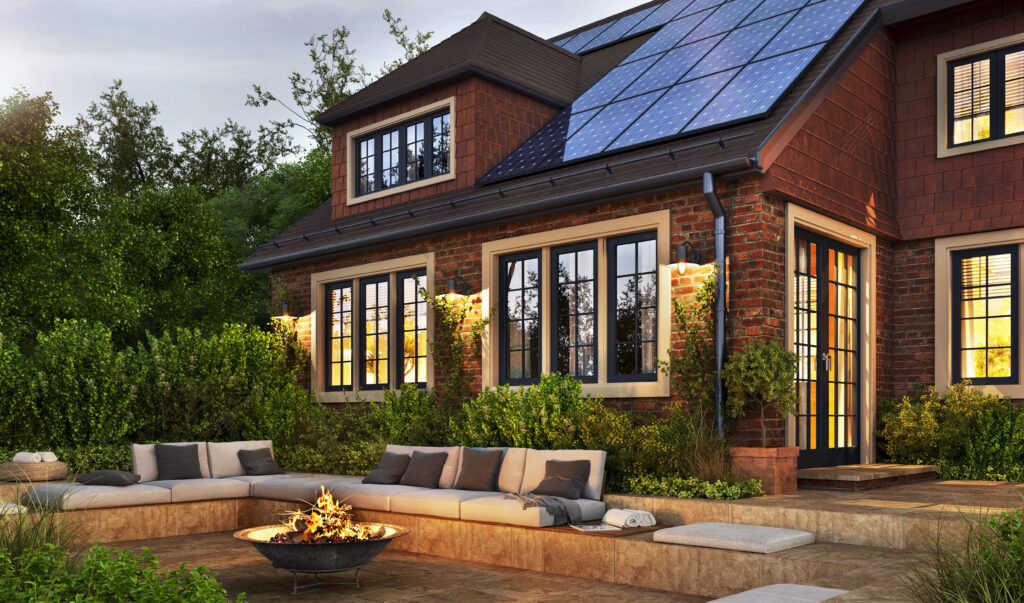
According to the online residential platform Houzz, the three essential goals of landscape lighting are “safety, security and sexy.” In other words, outdoor lighting should help people move safely; discourage dark hiding places; and add mood, ambience, and atmosphere to the landscape.
Here are six ways to make your outdoor spaces shine from Houzz and other experts.
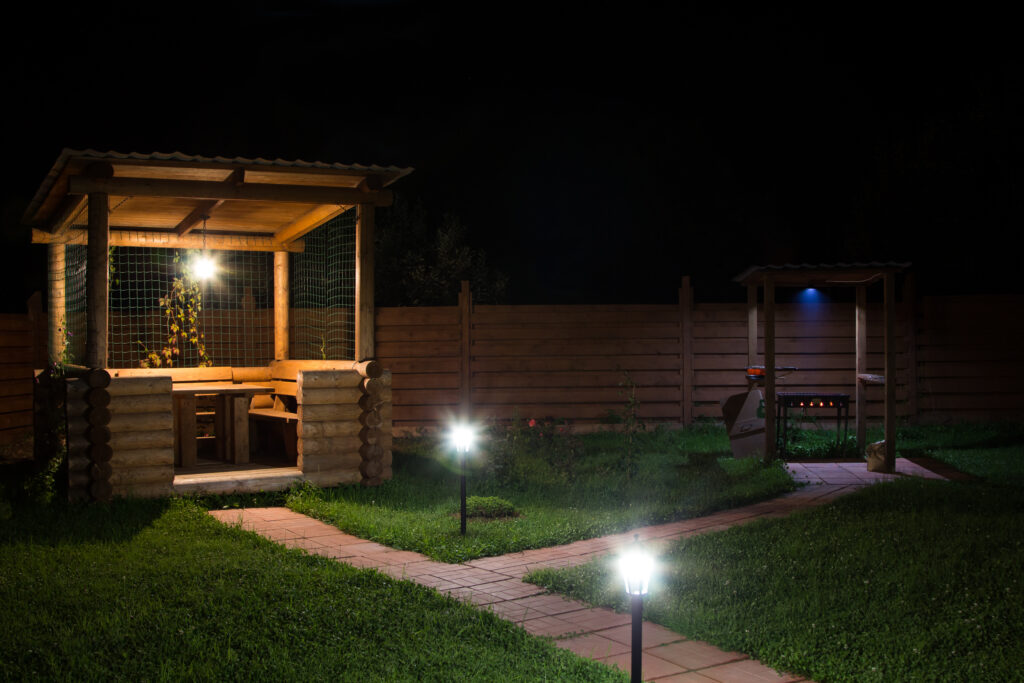
The first role of landscape lighting is practical. Homeowners and guests must be able to move safely from one part of the property to another. This includes whether they are walking from the driveway to the front door, stepping from the house onto a patio or following a garden path to a backyard seating area.
A good place to begin is by walking in a yard at night and noticing where the dark spots are. Look for steps, uneven surfaces, driveway edges, side yards, gates, and places where people may naturally cross from one material to another. These are where lighting can make the biggest difference.

This is especially important when a landscape includes hardscape features such as brick paver walkways, clay pavers, concrete pavers, stone steps or retaining walls. These materials give outdoor spaces shape and permanence, but they also create edges, levels and transitions. Low, well-placed path lights or step lights can help define those areas while preserving the overall atmosphere.
The goal is not to flood the yard with light but rather to create enough visibility for people to move easily and comfortably. A softly lit brick walkway or paver path can guide guests toward the front door or backyard patio while also creating a warm first impression.
One of the most beautiful outdoor lighting techniques is called moonlighting. Instead of placing bright fixtures at eye level, moonlighting relies on soft, downward-facing lights placed high in trees to mimic the look of natural moonlight filtering through branches.
This technique works especially well over outdoor living areas. A brick patio, porcelain tile, stone seating wall or outdoor fireplace can all benefit from soft overhead light that feels natural instead of staged. Moonlighting is less about showing everything at once and more about creating a mood.
It can also help connect different outdoor zones. A softly lit lawn can lead the eye toward a fire feature. Light falling through tree branches can make a seating area feel intimate, even in a larger backyard.

Because moonlighting often requires mounting fixtures high in trees or structures, professional placement is important. The right height, angle, brightness and warmth can make the difference between a yard that feels softly illuminated and one that feels over exposed.
Lighting also plays an important role in how secure a home is. Side yards, garage areas, fence lines, service paths and darker corners of the landscape may benefit from additional illumination. The trick is to make those areas visible without making the property feel harsh or over lit.
Motion sensors can be especially useful for functional lighting around garages, gates and service areas. They provide light when needed but allow the yard to remain softer and more relaxed the rest of the time.
Security lighting should feel intentional, not industrial. Instead of relying on one bright fixture, consider smaller, directed light sources that illuminate key areas. A path to a detached garage, a side gate or a patio entrance can be made safer and more welcoming with a thoughtful lighting plan.
One of the best reasons to light an outdoor space is to show off the materials that give it character. Brick and stone are naturally rich in texture, color and shadow. When illuminated well, those surfaces can become even more beautiful at night.
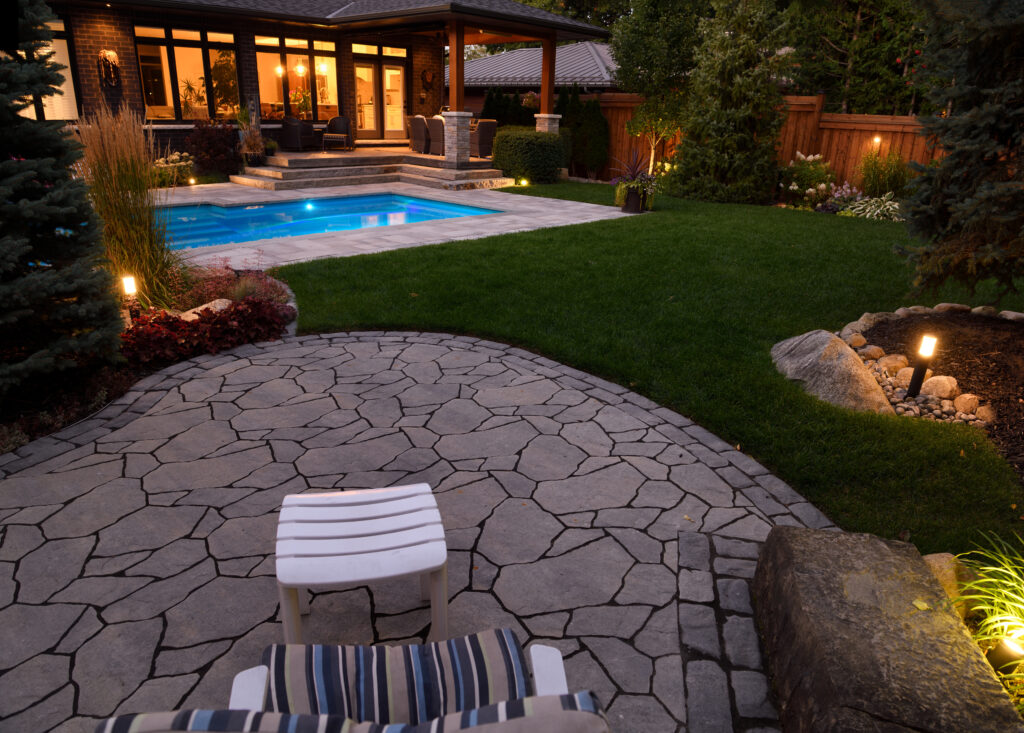
Directional lighting can be used to “rake” a brick wall, stone column, outdoor fireplace, or retaining wall. This means the light moves across the surface at an angle, catching the texture and creating subtle shadows. This approach works beautifully with masonry seating walls, garden walls and exterior facades. It can also make pavers feel more dimensional, especially when the light skims across a patio or walkway.
The most inviting outdoor spaces usually rely on layers of light. One fixture rarely does all the work. Instead, the best designs combine different types of lighting, so the space feels balanced, functional and atmospheric.
Around a patio, that might include low path lights, subtle step lights, a soft wash of light across nearby planting beds and accent lighting on a brick or stone wall. Around an outdoor kitchen, lighting may need to be more functional near the grill, prep area or pizza oven, while the surrounding dining area can remain softer.
The key is balance. A grill area may need brighter task lighting. A seating area may need a warmer, dimmer glow. A walkway may only need enough light to guide the way. When each layer has a purpose, the whole space feels more natural.
For a truly dazzling outdoor space after the sun goes down, find plants that are natural “reflectors” of light. The best plants for moonlighting are those with reflective foliage, variegated leaves, and pale white or pastel blooms. These plants catch the overhead light and create a dramatic, glowing effect in the dark.

Some plants to consider for a moonlighting project include:
A quick online search will suggest how these plants might dramatically enhance a moonlit backyard
The best outdoor spaces are not built around one feature. They come together through a combination of surfaces, structure, comfort and atmosphere. That’s the real beauty of a well-designed outdoor room.
It invites people outside in the evening, when the air cools, the lights come on and the stars begin to shine.
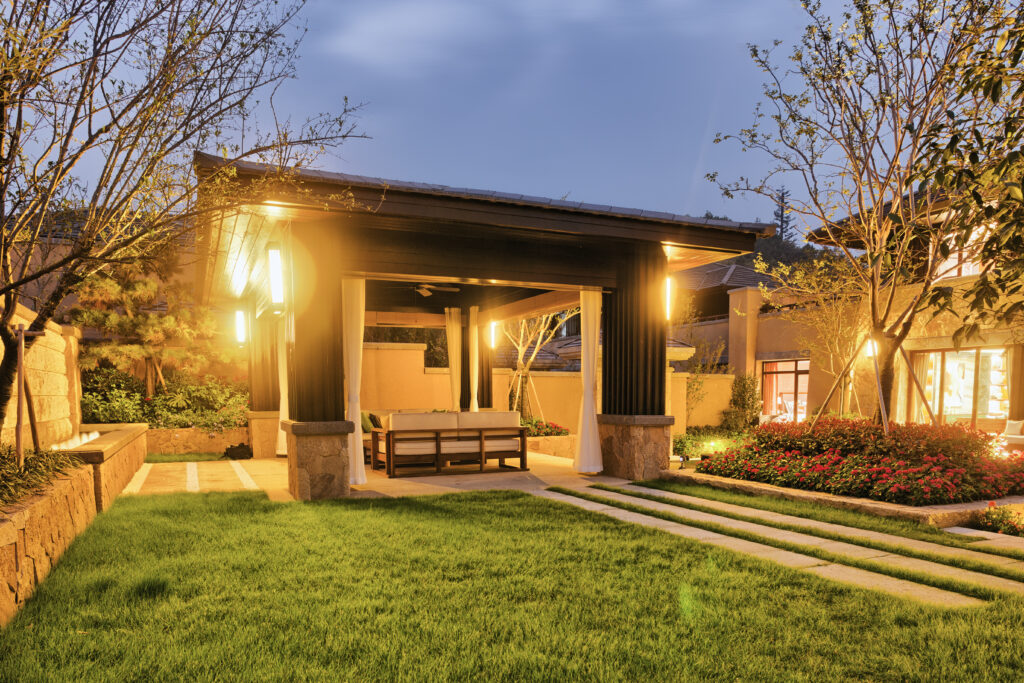

Thanks for stopping by! We’re constantly working to make Brick.com the best resource for your projects. We’d love to get your feedback about your experience today—it only takes about 60 seconds and helps us make improvements for you.